

Drop Coffee sits on Wollmar Yxkullsgatan by Mariatorget, a square and metro stop on Södermalm, the island just south of Stockholm's old town. The cafe is compact rather than hushed: a street-facing front, a turquoise espresso machine on the bar, beans stacked for retail, small tables by the windows, and a counter that keeps the visit pointed toward the cup.
This is the original public room for a roaster that now works from Rosersberg, north of the city, rather than a multi-shop cafe chain. The cafe visit is still the right way to meet Drop: espresso and filter on the bar, Svedjan Bageri bread and pastries close by, matcha and kombucha in supporting roles, and a shelf of beans and Kalita gear that turns a quick coffee into a small buying trip.
Coffee
Drop's house style is light to medium, origin-led, and deliberately transparent. The roastery publishes producer relationships and prices, buys from single farms and cooperatives, and roasts in small batches; in the cafe, that translates into coffee that aims for acidity, sweetness, and a clean finish rather than deep roast weight. Order an espresso drink if you want the easiest read on the bar, but know that the milk drinks still carry the roaster's brighter register.
That style is also the dividing line. Visitors who want a heavy, chocolate-dark espresso may find Drop too lean; people who want coffee with more lift, fruit, and farm-to-cup specificity are in the right room. The best order is not the most complicated one. Ask what is tasting best, choose the brew method that suits your patience, and let the staff steer you toward a coffee rather than a generic drink category.
Filter
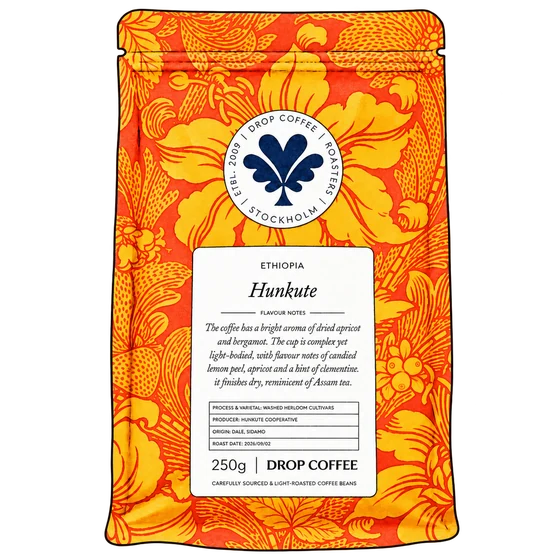
Filter is the reason to slow down here. Drop's cafe page names an ever-changing lineup of single-origin coffees on filter or espresso, and the retail shelf gives the same idea a practical ending: taste a cup, then take home the beans or the Kalita kit to keep working on it. For a first visit, filter plus a bag from the shelf is the clearest version of the stop.
Pastry
The food offer is there to support coffee rather than compete with it. Svedjan Bageri supplies organic bread and pastries, and the cafe also lists homemade sweets and savoury sandwiches for fika or a light lunch. This is not the Stockholm stop for a full brunch spread. It is stronger as coffee with a cardamom bun, pastry, or sandwich, especially if you are using Mariatorget as the start of a Södermalm walk.
Service & Room
The room can look more spacious in photos than it feels at peak times. Tables are close, the counter is the centre of gravity, and the outdoor seats are a bonus when the weather cooperates. A laptop can fit into the rhythm, but the better visit is shorter: order, ask one good coffee question, find a small table if one opens, browse the beans, then head back into Södermalm.
Service is best understood as coffee-forward rather than pampering. When the bar is on form, the knowledge is the attraction: grinding beans for home, explaining the lineup, or matching a filter choice to how bright you like your cup. The tradeoff is that the room can feel brusque when it is busy or when the lighter roast style is not what someone expected.
Why Filter Notes shortlisted Drop Coffee
Drop Coffee is shortlisted because the cafe gives Stockholm a direct line into one of Sweden's most influential roasting programs: light-roast espresso and filter, transparent sourcing, beans and brew gear to take home, and a small Mariatorget room that keeps the whole visit coffee-first. Cross town for the filter, the retail shelf, and the chance to taste Drop at its original address; choose somewhere softer if you mainly want a long, cushioned cafe sit.