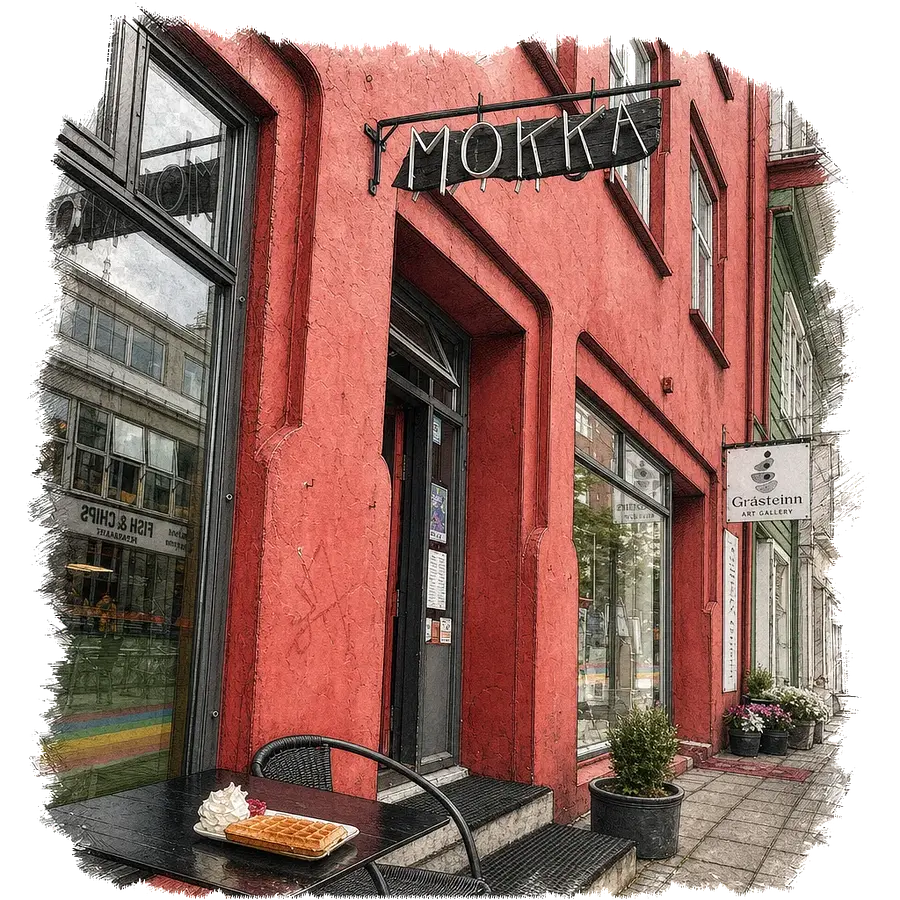
Mokka Kaffi sits on Skólavörðustígur, the central Reykjavík street many visitors know as Rainbow Street, a short walk below Hallgrímskirkja and close enough to the old shopping core to fold into almost any first day in the city. Inside, it is not trying to look new: wood panelling, red carpet, leatherette booths, small tables, and rotating art on the walls give the room its reason to exist.
Come for a hot drink, waffles, and a booth in a cafe that has kept its wood panelling, red carpet, leatherette seating, and rotating wall art. It is central and well known, but the best version of the visit is still simple: arrive between sightseeing stops and take a booth if one opens.
Coffee style
Mokka's coffee case is historical rather than cutting-edge. The cafe traces its identity to espresso culture, with espresso, cappuccino, and cafe latte still central to the visit. This is not the place to chase a rotating pour-over menu or a bag from a local roaster shelf. Order it as a classic espresso-bar visit: cappuccino, mocha, hot chocolate, or a straightforward coffee with something sweet.
What people go for
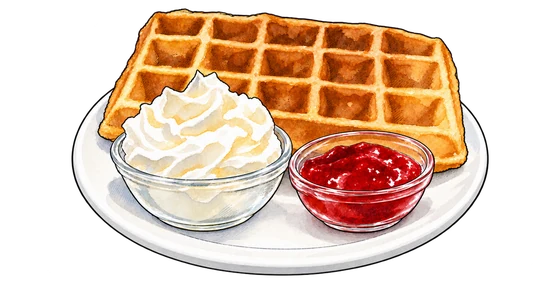
The waffles are the anchor. Cream and jam are the familiar order, and the supporting menu stays in cafe territory: cakes, pastries, sandwiches, tea, coffee, and hot chocolate. That food offer is strong enough to make Mokka more than a caffeine stop, especially for breakfast or a late-morning sit before walking up toward the church.
The feel
The room matters as much as the cup. Mokka still works as an art-lined cafe, with exhibitions changing regularly, and that gives the walls more life than standard retro styling. The compact layout means the visit can fill quickly when tourists and regulars overlap, but the booth seating, darker materials, and old-city location make it warmer than the average central cafe.
Why Mokka Kaffi is shortlisted by Filter Notes
Mokka Kaffi belongs on the Reykjavík shortlist because it gives the city guide a historic counterweight to newer specialty rooms: espresso lineage, waffles, local art, and a room that still feels physically tied to 1958. Cross town for the waffles, the hot chocolate, and the art-lined booth atmosphere; know before going that the coffee appeal is classic rather than modern-filter focused, and seating is part luck, part timing.